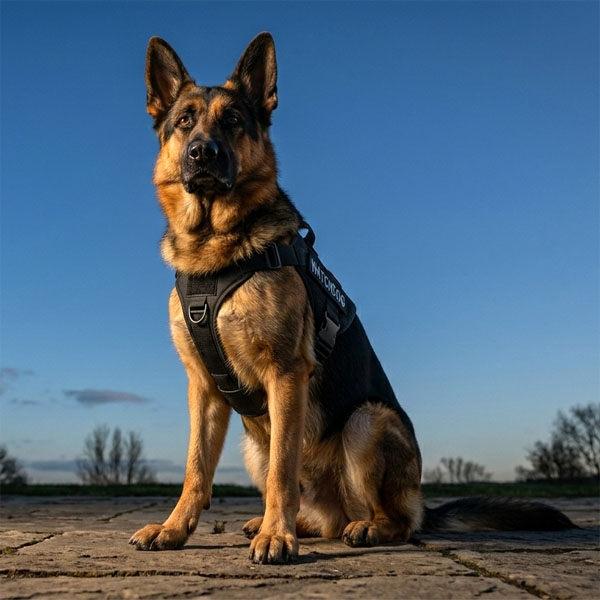
Watchdogs: One Concept, Many Meanings
A watchdog in embedded systems is much more than a timer that occasionally forces a reset.
From K9 style hardware supervision to software health checks and crash forensics, it is the silent guardian of system integrity.
Ask a hardware engineer what a watchdog is and you will probably hear about a timer that resets the system if it is not periodically refreshed.
Ask a software engineer and you will likely hear about a low priority routine that must run regularly to prove that the scheduler is still alive.
Both answers are correct. Both are incomplete.
The term watchdog is used to describe several different supervision mechanisms that operate at different levels of an embedded system. Some ensure that the CPU is still executing instructions. Others ensure that the scheduler is still functioning. Others verify that specific parts of the application are making progress. In safety critical industries, the watchdog may even be a mandatory, independently certified device.
A robust design does not rely on a single watchdog. It builds a supervision architecture, a kind of layered K9 supervision system where each level keeps an eye on the one below it.
This article revisits the different meanings of watchdog, clarifies what each type actually guarantees, and explores more advanced uses such as staged recovery, crash diagnostics, reset cause tracing, and centralized health monitoring.
The Core Idea: Detecting Loss of Progress
At its heart, a watchdog is a liveness detector.
It answers a simple question: is the system still making forward progress?
Depending on where it is implemented, progress may mean:
The CPU is still executing instructions
The scheduler is still switching tasks
Critical tasks are still running
The application is still doing meaningful work
If progress stops, the watchdog stops receiving its periodic kibble. And like any disciplined guard dog, it eventually reacts.
No single mechanism can cover all aspects of system health. That is why watchdog strategies are often layered.
The Hardware View: The Classic Watchdog Timer
From a hardware perspective, a watchdog is typically a countdown timer integrated into a microcontroller or SoC. Its behavior is simple:
The timer starts from a configured value.
Software must periodically refresh it.
If the timer reaches zero, a recovery action is triggered.
Refreshing the watchdog is often called feeding it. The metaphor is accurate: if you forget to feed it, it bites.
Typical recovery actions include:
System reset
CPU reset
Interrupt generation
Assertion of an external pin
The essential property is independence. Once enabled, the watchdog continues running even if the software enters an invalid state.
What it protects against
A hardware watchdog is effective at detecting:
Infinite loops
Deadlocks
Corrupted program flow
Complete loss of code execution
What it does not guarantee
A hardware watchdog only proves that something is running, not that it is correct.
The system can be:
Running the wrong code
Stuck in a logical loop
Producing invalid outputs
and still diligently feed the dog on schedule.
Advanced Hardware Mechanisms
Once the basic concept is understood, hardware watchdogs can be extended in important ways.
Windowed Watchdogs
A windowed watchdog defines a valid refresh window:
Refresh too late triggers a reset.
Refresh too early also triggers a reset.
This prevents a faulty system from refreshing the watchdog continuously in a tight loop.
In canine terms, you are not allowed to dump a truckload of kibble at once and claim the dog is fed for the week. Timing matters.
External Watchdogs and Independence
In more demanding systems, an external watchdog device is added. This is less a pet and more a trained security dog posted outside the house.
It is typically supervised through:
A toggled GPIO
A periodic pulse, possibly from the hardware itself, e.g. monitoring traffic on a backplane bus
A coded heartbeat signal
An external watchdog:
Has its own clock source
Is electrically independent
Can reset or power cycle the entire board
If the processor freezes completely, the external watchdog does not care. It simply notices the absence of its expected signal and takes action.
When Reset Is Not the Correct Response
In some systems, a watchdog timeout must not lead to automatic restart. Instead, the system may:
Power down the faulty subsystem
Force outputs into a safe state
Prevent restart
Signal a supervisory controller
Allow a redundant unit to take over
Here, the watchdog acts less like a simple guard dog and more like a trained safety officer that removes a malfunctioning unit from service.
The Software Watchdog
Hardware ensures that something is running. Software supervision ensures that the right things are running.
Scheduler-Level Watchdog
From a software perspective, a watchdog is often implemented as a low priority task in an RTOS system In a priority-based scheduler:
High priority tasks execute first.
Low priority tasks run only if higher priority tasks are not blocking the CPU.
If a low priority watchdog task still executes regularly, it proves that:
The scheduler is running
No task is monopolizing the processor
Interrupt load is not preventing scheduling
A common design is:
The watchdog task runs periodically.
It verifies system health.
It then refreshes the hardware watchdog.
This forms a supervision chain:
Scheduler health -> software watchdog -> hardware watchdog
If the chain breaks, the hardware watchdog eventually reacts.
Task Level Supervision
More advanced systems monitor individual tasks explicitly. Each critical task periodically reports that it is alive by:
Updating a timestamp
Incrementing a counter
Setting a heartbeat flag
A supervisory component verifies that each task reports within its allocated time window. If a task fails to report, the system may:
Attempt to restart that task
Enter a degraded mode
Escalate by withholding the watchdog refresh
This prevents one misbehaving task from quietly starving the rest of the system while the dog remains happily fed.
Hybrid Mechanisms: Mixing Hardware and Software
The most interesting watchdog features combine hardware and software behavior.
Pre-timeout Interrupts and Crash Diagnostics
Many watchdogs provide an early warning interrupt before the final timeout. This enables a two stage response:
Early interrupt for diagnostics and safe state handling.
Final timeout for reset or power removal.
Capturing crash data
Crash data may include:
CPU registers
Program counter
Stack contents
Fault status registers
Selected system state
In order to be useful, the crash context needs to be both integrous and persistent against reboot. This leaves two major options.
Flash storage
Flash ensures persistence but is slow and potentially unreliable in a crash context.
The no-cache, no-init RAM technique
A widely adopted technique is to reserve a dedicated RAM section with:
No cache or, more precisely, no write buffer
No initialization at boot
These properties are explicitly defined in the linker script and enforced through memory attributes.
Few developers modify linker scripts because the default configuration works well enough. Yet defining a custom no-init crash section is one of the most effective diagnostic tools available.
Placing crash buffers in a no-init section ensures that the startup code does not erase them: data survives reboot.
By mapping the region as non cacheable, writes reach physical RAM immediately without requiring explicit write-buffer flush.
During early startup, the system can:
Check reset cause
Validate crash buffer signature
Extract diagnostics
Later store them persistently
This approach preserves evidence before the watchdog performs its final duty.
Checking the Reason for the Last Reset
A good practice during startup is to determine the reason for the last reset. Most processors provide reset cause registers indicating:
Power on reset
External reset
Power failure
Software initiated reboot
Watchdog timeout
Brown out detection
Early in the startup sequence, the system should:
Read and preserve the reset cause
Log or transmit it if appropriate
Repeated watchdog resets tell a very different story from occasional power cycling. Combined with crash buffer data, reset cause tracing transforms the watchdog from a silent enforcer into a valuable diagnostic witness.
Watchdogs as a Central Health Supervisor
In well designed systems, the periodic watchdog refresh routine does more than simply toggle a register. It becomes a central aggregation point for general health indicators.
Before delivering its periodic kibble to the hardware watchdog, the software routine may check:
Heap watermark or remaining heap margin
Stack high watermarks for critical tasks
Task execution timestamps
Communication timeouts
Sensor update freshness
Internal error counters
Memory corruption guards
If any of these indicators exceed defined thresholds, the routine may:
Log a warning
Enter a degraded mode
Refuse to refresh the watchdog
At that point, the dog is not merely being fed on a timer. It is being fed conditionally, based on verified system health.
Indirectly, the watchdog becomes a central organ of supervision. It enforces discipline. Subsystems must prove they are healthy before the system is allowed to continue running.
Watchdogs as a Compliance Requirement
In some industries, a watchdog is not optional. It is required.
Safety-related standards often mandate an independent supervision mechanism capable of recovering the system from defined failure classes.
This frequently leads to an external watchdog that is:
Clocked independently
Electrically isolated
Capable of forcing a reset or removing power
The key concept is independence. If the guard dog lives in the same silicon kennel as the application processor, a single fault could silence both. Certification authorities tend not to like that.
In these systems, the watchdog is part of a documented safety architecture with traceable behavior and validated timing constraints.
Side Note: Linux-Based Systems
In embedded Linux systems, watchdog supervision spans multiple layers:
A hardware watchdog driver in the kernel
A user space watchdog daemon
The daemon periodically writes to /dev/watchdog. If it crashes or the system hangs, the hardware watchdog resets the board.
More elaborate setups monitor:
Service availability
System load
Specific processes
Even in Linux, the principle remains the same: regular feeding is allowed only if the system is behaving.
Common Mistakes
When engineering a watchdog-based supervision system, typical errors include:
Refreshing the watchdog from a timer interrupt without health checks
Allowing arbitrary code to refresh it
Ignoring reset causes
Not capturing crash data
Disabling the watchdog during development
A watchdog should validate health, not merely activity.
Key Takeaways
The watchdog is not a single mechanism. It is a family of supervision strategies operating at different system levels.
Hardware engineers see timers. Software engineers see scheduling. Safety engineers see independence and compliance.
A well designed embedded system sees all of these at once.
The most reliable embedded systems combine:
Task supervision
Scheduler supervision
Internal hardware watchdog
External independent watchdog
Each layer supervises the one below it. It is a hierarchy of increasingly serious guardians. If the inner layer fails, the next one intervenes.
Used properly, the watchdog subsystem:
Detects loss of progress
Aggregates health indicators
Captures diagnostic evidence
Enforces architectural discipline
Supports safe shutdown strategies
Meets compliance requirements
It is not merely guarding the system. It is continuously deciding whether the system is still healthy enough to keep running, and if not, when it is time to growl.
Enjoyed this article?
Embedded Notes is an occasional, curated selection of similar content, delivered to you by email. No strings attached, no marketing noise.