
The Desk KPI That Reveals Project Health
Walk into any embedded development team and you can often tell whether a project is healthy long before you speak to anyone. Forget the dashboards. Forget the planning meetings. Forget the beautifully formatted KPIs.
Look at the desks.
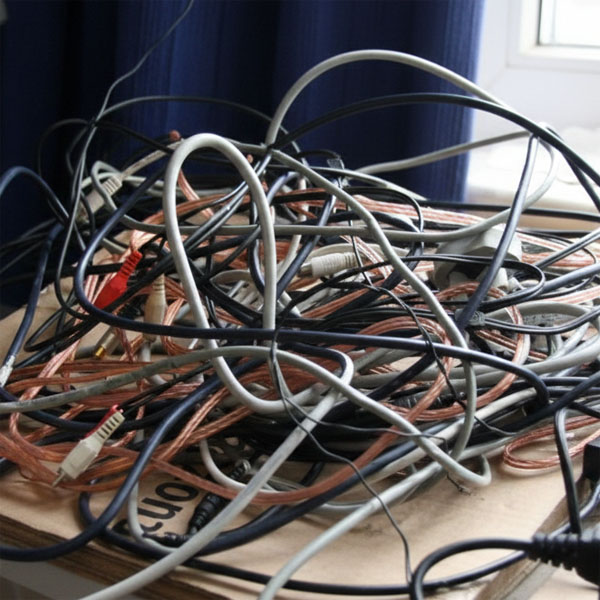
Boards with flying wires, improvised jigs, power supplies balanced on top of printouts, instruments left on, multi sockets chained together, mystery boxes from vendors nobody remembers, a soldering iron quietly overheating next to a laptop, and cables running across the floor like an obstacle course.
Some technical clutter is normal in embedded work. We deal with real hardware and real experiments. But over the years, I have witnessed a striking pattern:
Messy desks appear far more often in projects that are going off the rails.
Missed deadlines. Poor project control. A backlog growing faster than it is reduced. Sloppy documentation. Stress. Daily firefighting. I see the correlation everywhere. Is it causality or coincidence? I do not know. But I have my own opinion.
Healthy teams tend to keep their environment tidy. They work with intention. Their workspace reflects that intention.
Messy Desk, Messy Mind?
I am not claiming that a clean desk magically fixes project management. But physical clutter seems to amplify mental clutter. When the workspace looks like a failed EMC test, engineers enter a reactive mode instead of a structured one.
Certain warning signs appear repeatedly:
Random objects stacked on top of cabinets.
Cables crossing aisles.
Shadow networks created because someone was tired of waiting for IT.
Lab equipment on developer desks, often in violation of workplace rules.
Prototype boards lying around long after they should have been archived or recycled.
And I have seen extremes. One desk had countless plastic cups, each with one centimetre of cold leftover coffee, and, to my disbelief, cigarette buds floating inside. That is not just disorder. That is a complete loss of professional hygiene. When a team reaches that level of neglect, the project is usually in the same state.
Does an Embedded Desk Really Have to Be Messy?
No. It does not. And in many situations, it must not.
We work with boards, cables and instruments. Fine. But we also know how to keep things under control. A desk is not supposed to become a permanent crash site. Temporary setups can be labelled and then dismantled. Tools can be put back in their place. Experiments can be photographed and documented so the table does not have to serve as long term memory.
The workspace is a tool, just like the oscilloscope. It can help or hinder.
Safety and Legal Considerations
Beyond the impression of disorder, many desks violate workplace rules.
A soldering iron at a developer workstation is often forbidden. It belongs in a proper lab with ventilation and safety equipment, ideally with a technician who will probably produce more reliable solder joints than most developers anyway.
Cables across walkways are not allowed. Shadow networks can create serious reliability concerns and security incidents. Improvised power extensions can be dangerous.
Some situations were even more alarming. I once saw a developer whose desk was so overloaded with equipment, papers and random hardware that he opened a drawer (which couldn’t close anyway), and used it as a platform to solder a board. A drawer full of flammable documents, a hot iron, cables everywhere and no regard for basic safety rules. One single picture of that setup could have summed up the project status better than a hundred pages of project reports.
A desk that breaks rules is usually found in a team that breaks processes. Patterns repeat.
ESD Is Not Optional
There is another often ignored risk when working on bare electronic devices at a regular office desk. Most desks are simply not designed for ESD protection. The surface is not grounded. The chair generates static. The carpet acts as a charge reservoir. Even clothing can accumulate several kilovolts on a dry day.
Instruments in labs are usually connected to proper ESD benches with grounded mats and wrist straps. Developers sometimes forget that, and I have seen bare boards placed directly on wood, plastic or sheets of paper, then handled as if nothing could possibly go wrong.
The failure does not always happen immediately. Sometimes it becomes an intermittent bug, a degraded component or a mysterious instability that burns days of debugging.
Working without ESD protection can silently damage sensitive ICs, especially modern SoCs, RF front ends and power management chips. This is not theory. It is something I have witnessed in real projects. A team with no ESD discipline often ends up fighting unexplained behaviour that disappears when the board is replaced.
A desk is not a lab. And ESD does not forgive.
The Evening Reset Rule
There is one habit that changes everything:
Every evening, spend a maximum of five minutes to reset the desk.
Five minutes are enough to:
Put boards back in their boxes.
Roll and store cables.
Turn off computers and instruments.
Clear the surface.
Remove confidential material from sight.
This light hygiene avoids the slow accumulation of entropy. It supports confidentiality. It helps the cleaning staff do their job. And you start the next morning with a workspace that looks ready to solve problems instead of adding new ones.
The Monthly Deep Clean
Daily cleanup keeps chaos at bay, but it does not address the deeper buildup of unused items, obsolete prototypes or drifting organisation.
This is why a monthly routine helps:
On the last Friday of every month, spend 15-30 minutes on a proper deep clean.
Many companies finish a bit earlier on Fridays anyway, so the timing fits naturally.
This session is the moment to:
Sort boards, kits and components.
Return lab equipment where it belongs.
Discard obsolete items.
Label cables, adapters and power supplies that tend to wander.
Reorganize drawers and shelves.
Verify that the setup still respects safety rules.
This is essentially applying a lightweight 5S approach. Sort. Set in order. Shine. Standardize. Sustain.
It does not require a Lean consultant. Just discipline and thirty minutes a month.
If You Need More Space or More Tools, Ask
If your desk is messy because you physically lack storage, ask for more. Facilities can provide cabinets, trays and shelves. If you lack power sockets, they will install some. If you need an isolated development network, work with IT, not against. They prefer cooperation to discovering a rogue switch or Wi-Fi router under a desk.
Most messes start as improvisations. Many improvisations disappear when you involve the right support teams.
Key Takeaways
I have seen many projects, both healthy and derailing. I stopped being surprised by how much the desks reveal. It is not a scientific metric, but the pattern is consistent. Clean, organised workspaces tend to accompany stable, disciplined projects. Chaotic desks tend to accompany projects that are fighting fires.
Whether it is correlation or causality, I will let statisticians debate. My opinion is simple:
A tidy desk supports tidy engineering. A messy desk rarely helps anything.
Enjoyed this article?
Embedded Notes is an occasional, curated selection of similar content, delivered to you by email. No strings attached, no marketing noise.
Related resources
- Kr-85: A New Metric for Embedded System Technical Debt
- My Project Is Doomed. What Now?
- Platform Architecture service · en | fr
- Training · en | fr